Shopping Cart


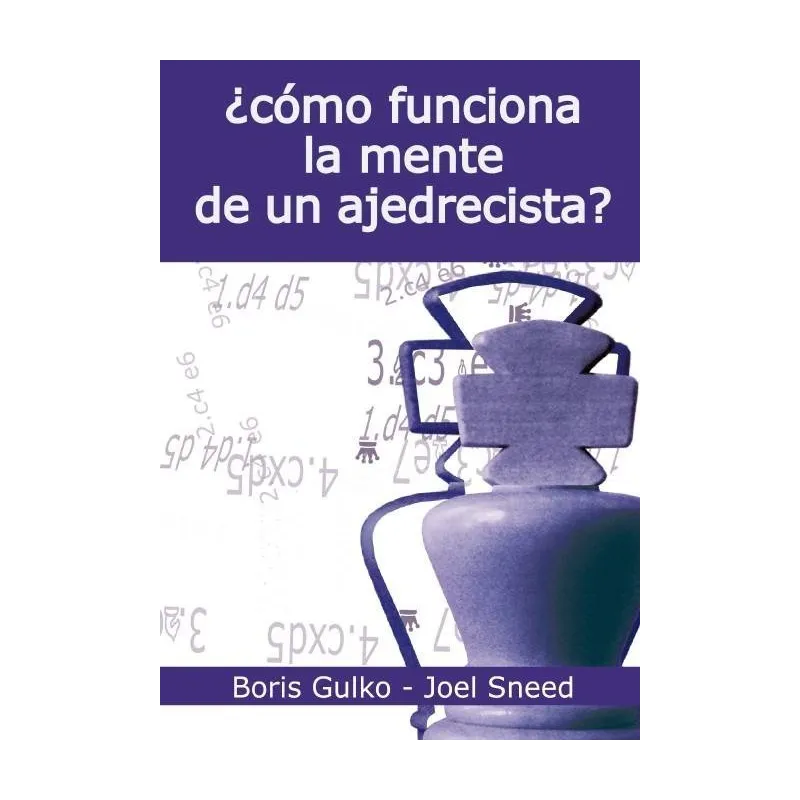
¿Cómo funciona la mente de un ajedrecista?
In stock
€21.00
Tax included
How does a chess player’s mind work?
Explore the psychology of the chess player and reflect on the different factors that contribute to success in a game.
How does a chess player’s mind work?
Explore the psychology of the chess player and reflect on the different factors that contribute to success in a game.
To win a chess game, it is not enough to have the best repertoire of openings, to be an expert in calculating variations, or to know all the tactical and strategic secrets. To win, it is equally important to take into account the style and character of our play and that of the opponent, the weaknesses and strengths of both, and thus be able to predict, for example, the direction in which the game may evolve.
Through the analysis of games between grandmasters, Boris Gulko and Joel Sneed highlight how psychological factors such as perception, self-confidence, imagination, and the level of aggression of each player contribute to shaping the contest.
Boris Gulko is one of the few players with a positive score against Kasparov, and the only one to have won both the U.S. and Soviet national championships. He holds a master’s degree in psychology from Moscow University.
Joel Sneed is a professor of Psychology at the University of New York and a strong chess player.
- Editorial-
- La Casa del Ajedrez
- Autor
- Gulko, Boris
Sneed, Joel - Format
- 17 x 24 cm.
- Pages
- 212
- Edition
- 2024
9788412835922
Tap to zoom