
Shopping Cart
- Product analysis
- 0 likes
- 573 views
- 0 comments
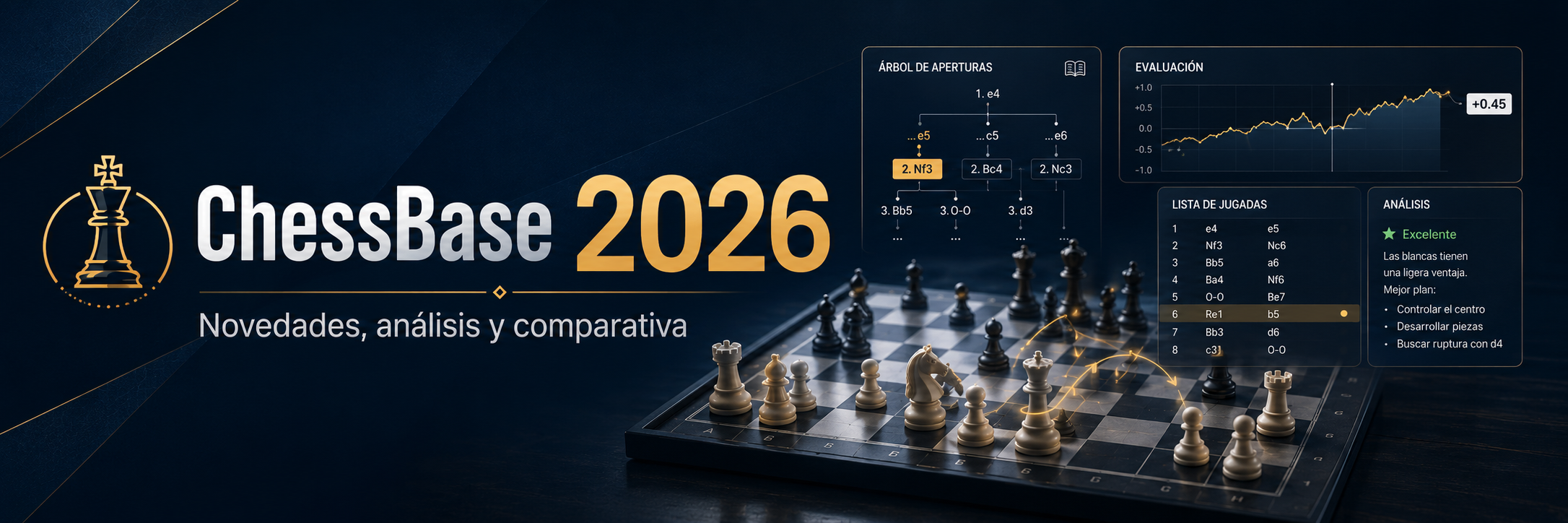
ChessBase 2026: A New Step Forward in Chess Preparation
ChessBase has once again updated its flagship chess database program with ChessBase ’26, also commonly referred to as ChessBase 2026. This new version is not just a visual update or a minor improvement. It represents an important evolution in the way players study openings, prepare against opponents, analyse games and understand strategic plans.
For decades, ChessBase has been one of the most important tools for club players, coaches, masters, grandmasters, chess schools and federations. Its main purpose has always been clear: to organise, search, study and analyse chess games as efficiently as possible.
With ChessBase 2026, the program takes another step towards a more visual, practical and understanding-based approach to chess preparation. The new version focuses especially on the Opening Report, improved reference searches, clearer strategic plans and the new Monte Carlo analysis system.
What Is ChessBase 2026?
ChessBase 2026 is the latest version of the world’s most famous chess database program. It allows users to store games, create opening repertoires, study positions, search huge databases, analyse with engines, prepare against opponents and organise training material.
It should not be confused with Fritz. Although both products belong to the ChessBase ecosystem, ChessBase is mainly focused on databases, preparation, analysis and study, while Fritz is more focused on playing, training and analysing in a more direct way against the computer.
ChessBase ’26 is available in several languages and works on Windows 10 or higher. For serious use, it is especially recommended to work with a good computer, enough RAM and an SSD, particularly when handling large reference databases.
Main New Features of ChessBase 2026
1. New Opening Report: The Star Feature of ChessBase 2026
The most important new feature in ChessBase 2026 is the new Opening Report. This function generates a complete report on a specific opening position and goes far beyond basic statistics such as popularity or winning percentage.
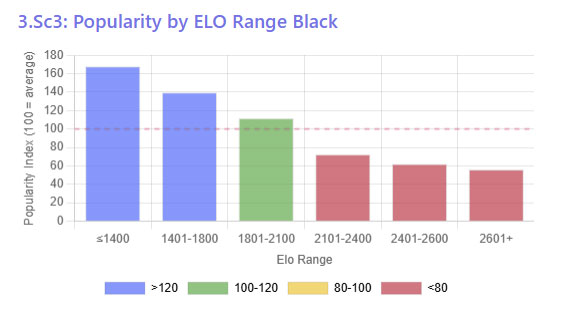
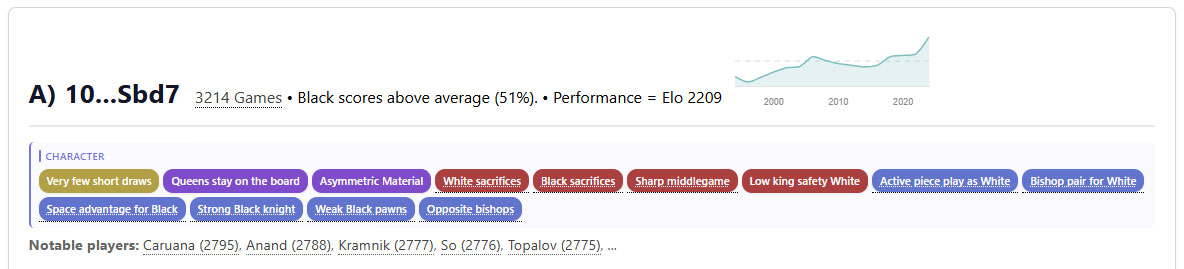
The new report analyses the main continuations, the historical development of the variation, its popularity, its performance by Elo range, the players who have used it, the typical plans and the strategic character of the position.
This is especially useful because an opening does not work in the same way at every level. A line that may be considered doubtful at elite level can still be practical, dangerous and perfectly playable at club level.
For club players, this is very important. The best move according to the engine is not always the most practical choice. Often, it is more useful to find understandable, solid and practical variations that work well against real opponents.
2. Smarter Statistics by Playing Level
Previous versions of ChessBase already offered game statistics, percentages and move frequency. However, ChessBase 2026 goes further by separating the information more clearly according to the level of the players.

This means that a variation can be studied differently depending on whether it is being prepared for players under 1400, between 1400 and 1800, between 1800 and 2100, advanced club players or elite players.
The result is more realistic preparation. For example, a line that appears rarely in grandmaster games may be very effective in school tournaments, club competitions or rapid games. In the same way, a very theoretical variation may have excellent results at top level but may be impractical for a player who does not have time to memorise long theoretical lines.
This makes ChessBase 2026 especially useful for coaches, as it allows them to adapt opening repertoires to the real level of their students.
3. Typical Plans and Piece Trajectories
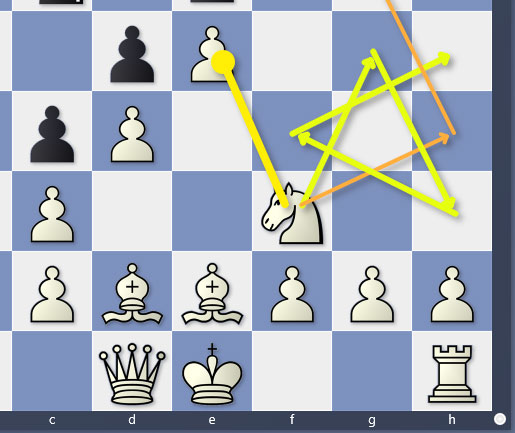
Another important improvement is the visualisation of plans. ChessBase ’26 includes features that show which pieces are commonly moved, where they usually go and which pawn advances are frequent in a particular structure.
This is especially interesting in openings such as the London System, the King’s Indian Defence, the Caro-Kann, the Queen’s Gambit, the Sicilian Defence or the French Defence, where understanding plans is often more important than memorising individual moves.
For example, the user can see whether a knight typically goes to c5, e5 or g4; whether a bishop is usually exchanged or preserved; whether pawn breaks such as h4, c5, e5 or b5 are common; or which pieces are usually involved in a kingside attack.
This approach is very useful for players who want to improve their strategic understanding. Instead of learning an opening as a list of moves, ChessBase 2026 helps the user understand what each side is trying to do.
R
4. Improved Reference Search
The reference search is one of the classic ChessBase functions. It allows users to see which games have reached a specific position, which moves were played, with what results, by which players and during which periods.
In ChessBase 2026, this function has been improved to make opponent preparation and filtering more precise. Users can work more efficiently with player preparation, colour, time control and more reliable game selection.
This is important because not all games have the same value. A classical game between strong grandmasters should not be considered in the same way as an online blitz game. When preparing for a serious tournament game, cleaner filters help the user find more relevant information.
5. Monte Carlo Analysis: A New Way to Study Positions
One of the most interesting new features in ChessBase 2026 is Monte Carlo Analysis. This function allows the engine to play many self-play games from a given position and then generate winning and drawing percentages based on the results of these simulations.
The idea is related to the type of training used by neural-network engines such as AlphaZero: the program explores a position through many internal games and refines its evaluation.
Instead of simply offering one main engine line, Monte Carlo analysis can help estimate which moves work better in practice and which positions offer better chances.
This does not replace traditional engine analysis, but it complements it. It can be useful in complex positions where a single main line is not enough, especially in strategic middlegames, complicated endings or structures with many possible plans.
6. AI Consult and Natural-Language Explanations
ChessBase 2026 also moves forward in the use of artificial intelligence to explain positions. The program includes features designed to describe plans and strategic ideas in natural language.
This can be very useful for players who do not only want to know “what move the engine recommends”, but also want to understand why a move makes sense.
For coaches, this can save time when preparing lessons, because it helps transform complex positions into explanations that are easier for students to understand. For self-taught players, it can serve as a guide to interpret positions that would otherwise be reduced to just a numerical engine evaluation.
7. More Modern Visual Design and Interface Improvements
ChessBase 18 already introduced visual changes, new icons and personalisation options. ChessBase 2026 continues in that direction with more visual themes and icon styles.
The program also maintains different board options, including 2D boards, 3D boards and more attractive visual displays. These improvements are not necessarily the most important part of the program from a chess-strength point of view, but they do make daily work more comfortable and visually pleasant.
For users who spend many hours analysing games or preparing lessons, a clearer and more modern interface is a real advantage.
8. Easier Engine Management
ChessBase 2026 also improves the management of analysis engines. The engine management dialogue has been redesigned to make it easier to organise, remove and configure default engines.
This is useful for users who work with several engines, such as Stockfish, Fritz, cloud engines or other specialised modules. A coach or advanced player can switch between quick analysis, deep analysis and opening preparation more efficiently.
9. Improved Detection of Duplicate Games
Another practical improvement is the enhanced detection of duplicate games. ChessBase 2026 includes a rebuilt “Find Double Games” tool, designed to be faster, more reliable and easier to use with large databases.
This may seem like a minor improvement, but it is very important for users with huge collections of games. A poorly organised database with many duplicates can distort statistics, slow down searches and make preparation less accurate.
ChessBase 2026 vs ChessBase 18
ChessBase 18 was already a very important version. It introduced player-style analysis, strategic theme searches, access to billions of Lichess games, opponent preparation using Lichess and Chess.com accounts, Chess.com game downloads through API, cloud engine integration, ChessBase Mobile, QR codes for games and positions, visual improvements and better reference-search filters.
ChessBase 2026 does not replace those features; it builds on them. The main difference is that ChessBase 18 focused heavily on expanding access to data, online games and opponent preparation, while ChessBase 2026 focuses more on interpreting that data more intelligently.
| Feature | ChessBase 18 | ChessBase 2026 |
|---|---|---|
| Personal database management | Yes | Yes |
| Engine analysis | Yes | Yes, with improvements |
| Opponent preparation | Yes, with Lichess/Chess.com tools | Yes, with improved filters |
| Reference search | Yes | Yes, more practical and visual |
| Player-style analysis | Yes | Yes |
| Strategic themes | Yes | Yes |
| Advanced Opening Report | More limited | Major new feature |
| Elo-range statistics | Less developed | Much more useful |
| Visualisation of plans | Limited | Improved with piece trajectories |
| Monte Carlo analysis | Not a main feature | Yes, highlighted new feature |
| Visual themes and icons | Updated | More options and styles |
| Duplicate game detection | Yes | Improved |
| General focus | Data, preparation and online access | Data, plans, practice and understanding |
Is It Worth Upgrading from ChessBase 18?
The answer depends on the type of user.
For a casual player who only uses ChessBase to store games or occasionally check a database, ChessBase 18 is still a very powerful tool. However, for tournament players, coaches, clubs and users who work regularly on openings, ChessBase 2026 brings important improvements.
The upgrade is especially worthwhile if:
- You prepare openings regularly.
- You want to understand typical plans better.
- You work with students and need to explain positions clearly.
- You want to compare lines by Elo level.
- You use large databases such as Mega Database.
- You prepare against specific opponents.
- You analyse games deeply with engines.
- You manage large databases and need better organisation.
It is not just about having “more games”. The real value lies in obtaining better conclusions from those games.
ChessBase 2026 for Club Players
For club players, ChessBase 2026 can be especially useful in three areas: openings, analysis of personal games and opponent preparation.
In openings, it helps players choose realistic lines. The main grandmaster variation is not always the best choice for a 1600, 1800 or 2000-rated player. Sometimes it is better to choose a simpler line with clear plans and good practical results.
When analysing personal games, the player can store their own games, review them with an engine, compare them with model games and search for similar positions. This helps detect recurring mistakes: problems in certain pawn structures, poor endgame handling, premature attacks or lack of understanding of typical plans.
In opponent preparation, ChessBase allows users to search for an opponent’s games, check their usual openings and prepare specific responses. This is especially useful in tournaments where pairings are known in advance.
ChessBase 2026 for Coaches and Chess Schools
For coaches, ChessBase 2026 can be a very powerful working tool. It allows them to create databases for individual students, prepare thematic lessons, search for model games, generate opening material and organise exercises.
The new Opening Report can be particularly useful when explaining an opening in class. Instead of teaching only a sequence of moves, the coach can show typical plans, players who have used the variation, common structures and frequent mistakes.
It can also be used to prepare repertoires adapted to the level of each student. A child who is starting to compete does not need to memorise grandmaster theory; they need to understand clear schemes. An advanced player, on the other hand, can benefit from deeper statistics and more specific preparation.
ChessBase 2026 for Chess Clubs
A chess club can use ChessBase 2026 to organise games from its players, prepare group training sessions, study opponents in team competitions and create internal databases.
For example, before a league match, a captain or coach can review the opponents’ repertoires, prepare simple lines for each board and search for recent games. The club can also create training sessions on specific themes: attacks against the king, rook endings, isolated-pawn structures, opposite-side castling or typical plans in a chosen opening.
Relationship with Mega Database 2026
ChessBase 2026 becomes even more powerful when combined with a large database such as Mega Database 2026. Mega Database is ChessBase’s premium game collection and contains millions of high-quality games.
The difference is simple: ChessBase is the program, while Mega Database is the game archive. The program allows users to search, analyse and work; the database provides the material.
For basic use, it is possible to work with personal or smaller databases. However, to fully benefit from functions such as the Opening Report, statistics and advanced preparation, a large and updated database is highly recommended.
Main Advantages of ChessBase 2026
The greatest advantage of ChessBase 2026 is that it turns chess information into practical knowledge. It does not simply show games and percentages; it helps users answer more useful questions:
Which line works best at my level?
What are the typical plans in this structure?
Where do the pieces usually belong?
Which strong players have used this variation?
What tactical ideas appear frequently?
Which positions should I practise?
What does my opponent usually play?
What type of game should I aim for?
This practical approach is what separates ChessBase 2026 from a simple game database.
Possible Disadvantages
ChessBase 2026 is a very complete tool, but there are also some points to consider.
The first is the learning curve. Although the interface has improved, the program includes many functions and can feel overwhelming at first. A new user will need time to learn how to make the most of databases, filters, reports, engines and analysis options.
The second point is that it is not designed only for playing quick online games. For that, platforms such as Chess.com, Lichess or simpler chess programs may be more convenient. ChessBase is designed for studying, preparing and organising.
The third point is that to get the most out of it, it is advisable to work with good databases and a reasonably powerful computer, especially when using large reference databases.
ChessBase 2026 Compared with Online Alternatives
Today there are many online tools for studying chess: Lichess, Chess.com, Chessable, opening databases, browser engines and training platforms. Many of them are excellent, and some are free.
However, ChessBase still has its own place. Its main advantage is the depth of database work, the organisation of material, professional preparation and the integration of many tools in a single environment.
Lichess and Chess.com are excellent for playing, analysing quick games and consulting online databases. Chessable is very useful for memorising repertoires through repetition. But ChessBase is more powerful when the goal is to build a personal library, prepare against opponents, filter games, analyse trends and create long-term study material.
These tools are not mutually exclusive. Many players use several of them: they play online, download their games, analyse them in ChessBase and build repertoires or training databases.
Conclusion: A Version Designed to Understand Chess Better
ChessBase 2026 is an important update because it does not simply add more data. Its greatest contribution is helping the user interpret information more effectively.
The new Opening Report, Elo-range statistics, plan visualisation, piece trajectories, Monte Carlo analysis and AI-based explanations make the program more focused on understanding. For serious players, coaches, clubs and chess schools, this can make a real difference.
ChessBase 18 was already a very powerful version, especially thanks to its improvements in opponent preparation, online game access and player-style analysis. But ChessBase 2026 goes one step further: it tries to explain what is happening in a position and why certain plans work better than others.
For anyone who studies chess regularly, ChessBase 2026 is not just a new version. It is a more complete, more visual and more practical study tool.
Final Commercial Closing Sentence
At Escacimat, we especially recommend ChessBase 2026 for players who want to prepare their openings better, analyse their games in greater depth and work like competitive players and coaches. It is a complete tool for anyone who wants to study chess in a serious and organised way.
Comments (0)